BE CIVIL ENGINEERING
To provide a high-quality learning environment inculcating fundamental and specialized engineering knowledge, skills in critical thinking, communication, teamwork and leadership for producing globally competitive engineers; and to create opportunities for students and faculty for conducting basic and applied research that contributes to society through sustainable engineering principles and practices
INTRODUCTION
The Civil Engineering Department at DHA Suffa University offers a Bachelor’s Degree Program BE (Civil) spanning over 4 years. The program has been prepared in accordance with the Pakistan Engineering Council (PEC) guidelines. The DCK campus serves as the living lab for civil engineers with all sorts of ongoing mega projects in the vicinity area. Specialization streams of Construction Management, Structures, Transportation and Water Resources shall be offered through elective courses beyond the core Civil Engineering courses.
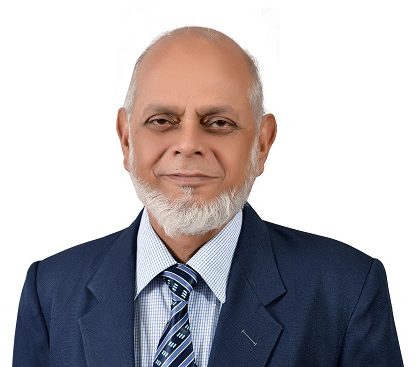

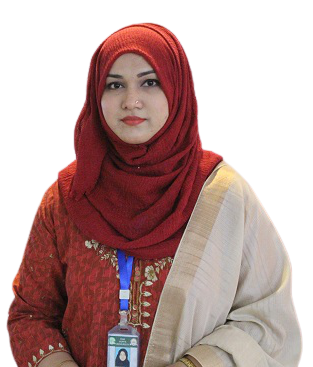
FACULTY
Faculty for Civil Engineering has been appointed with a focus on their foreign teaching and research experience. Most of them also have rich experience of working for the industry as well as academia. The faculty is actively involved in developing solutions for the present problems using futuristic concepts. Our faculty has publications in high-impact journals such as the American Society of Civil Engineers (ASCE).
Laboratory
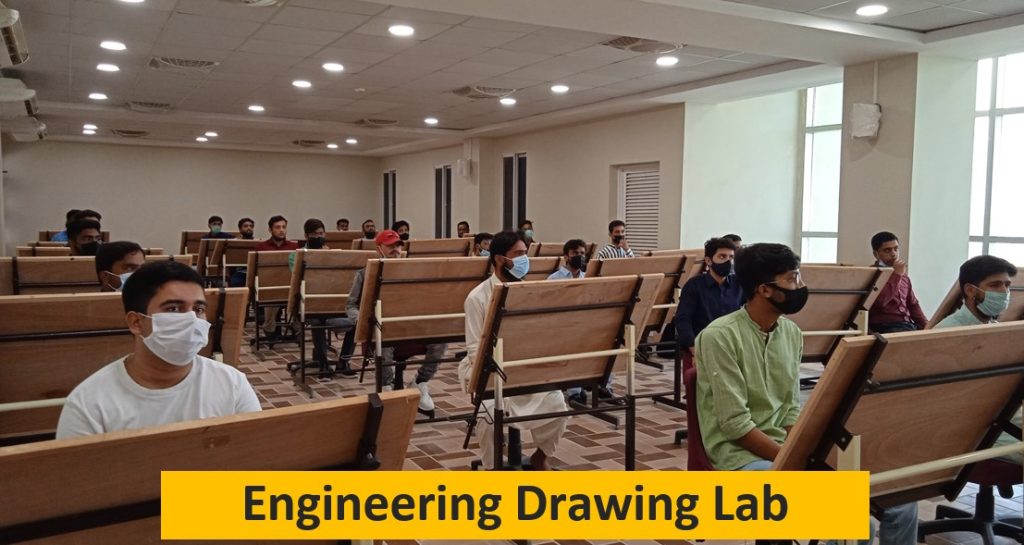
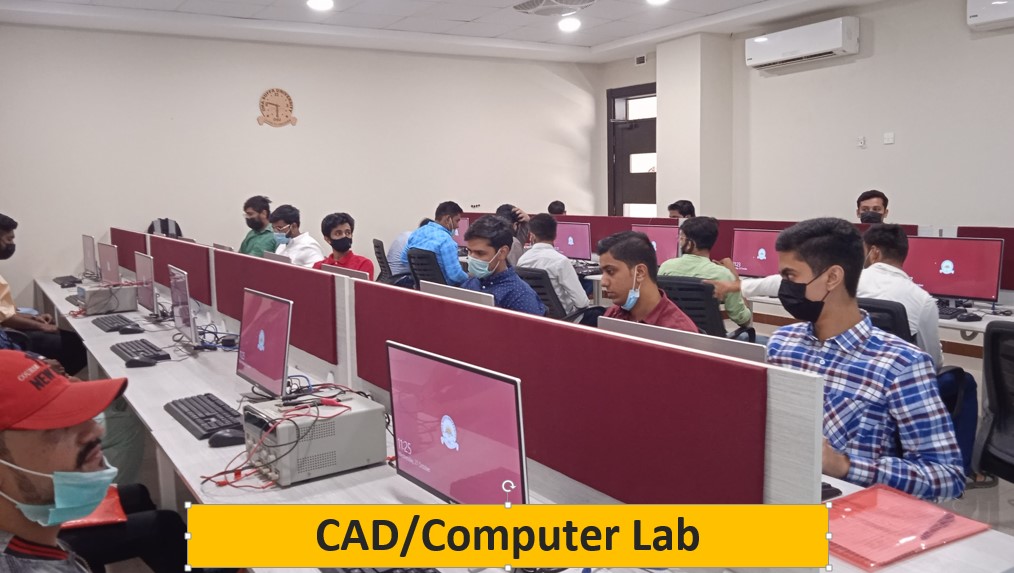
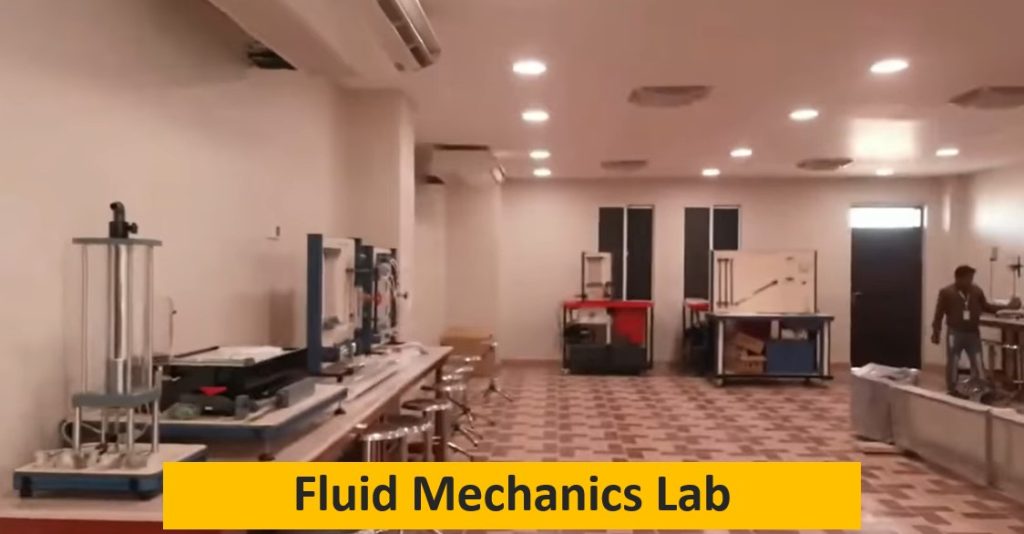
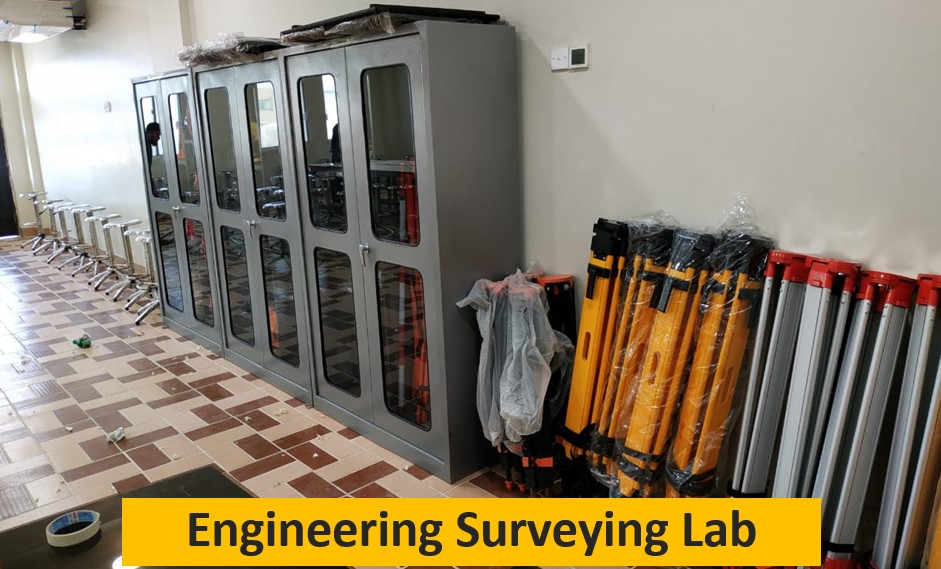
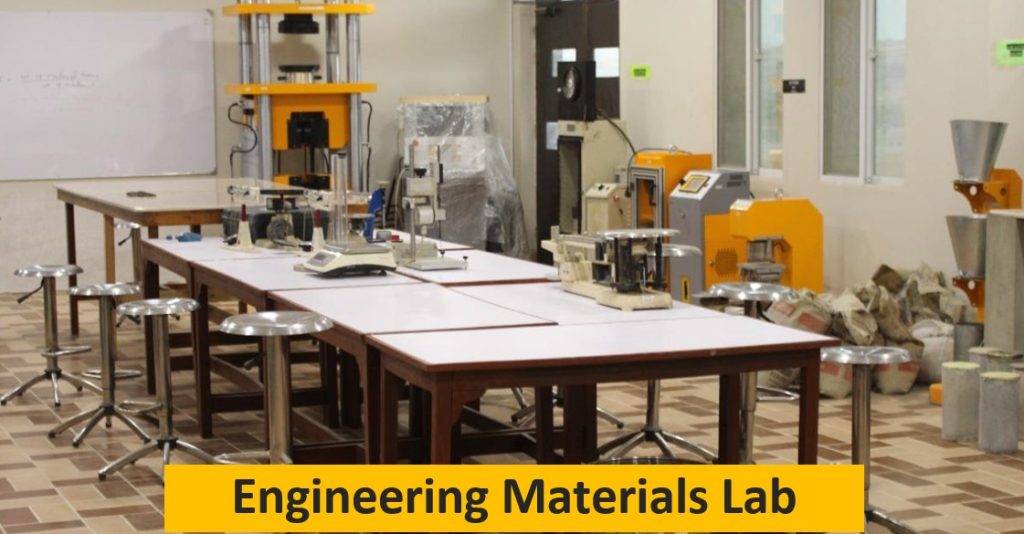
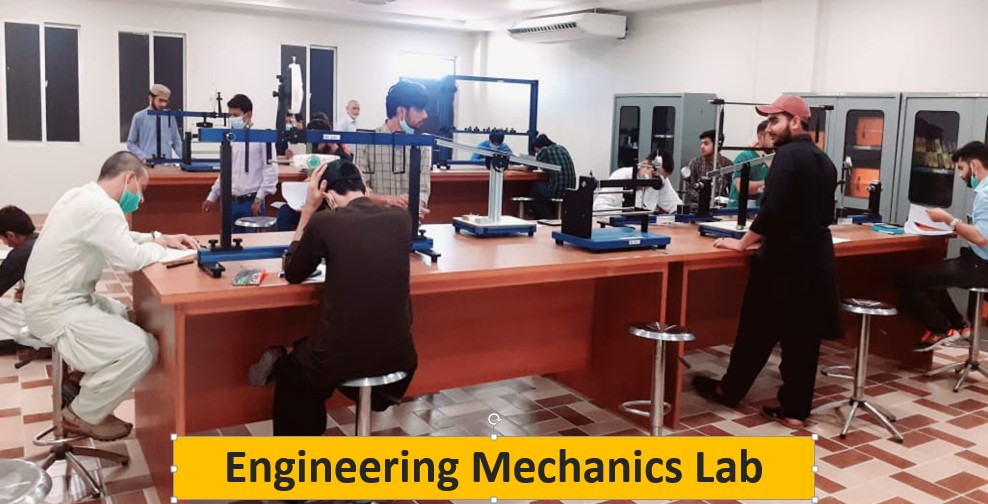
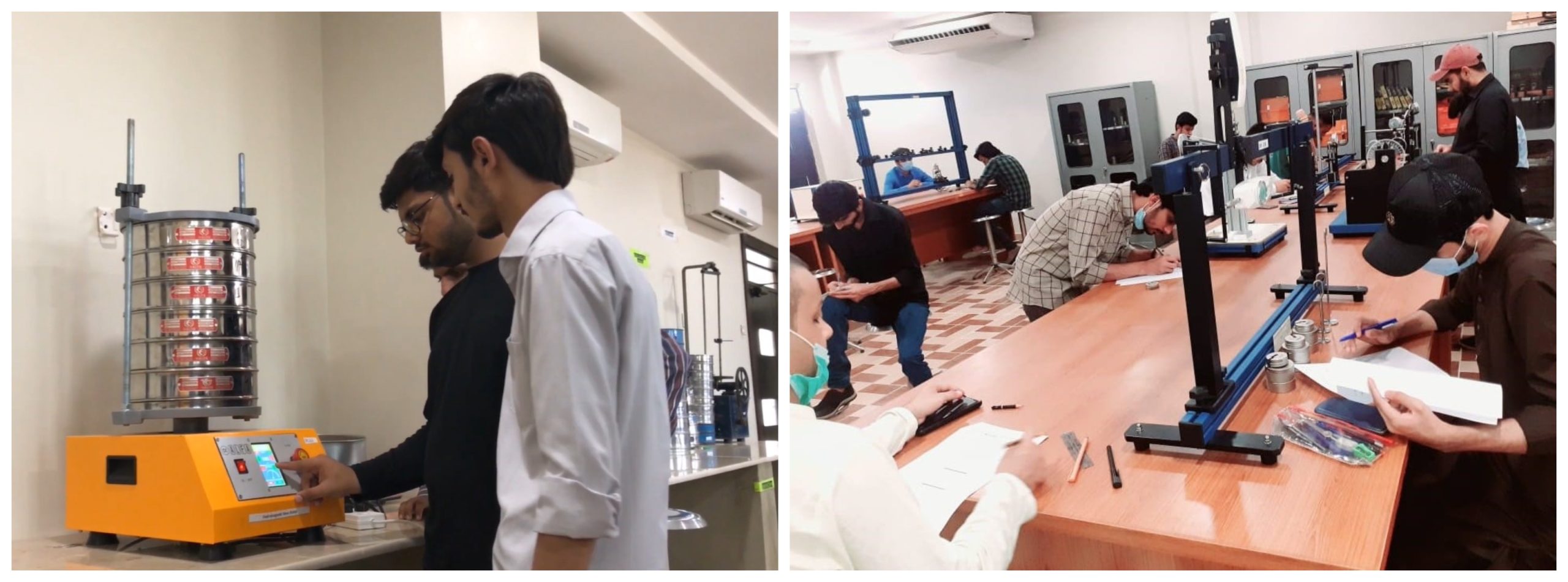
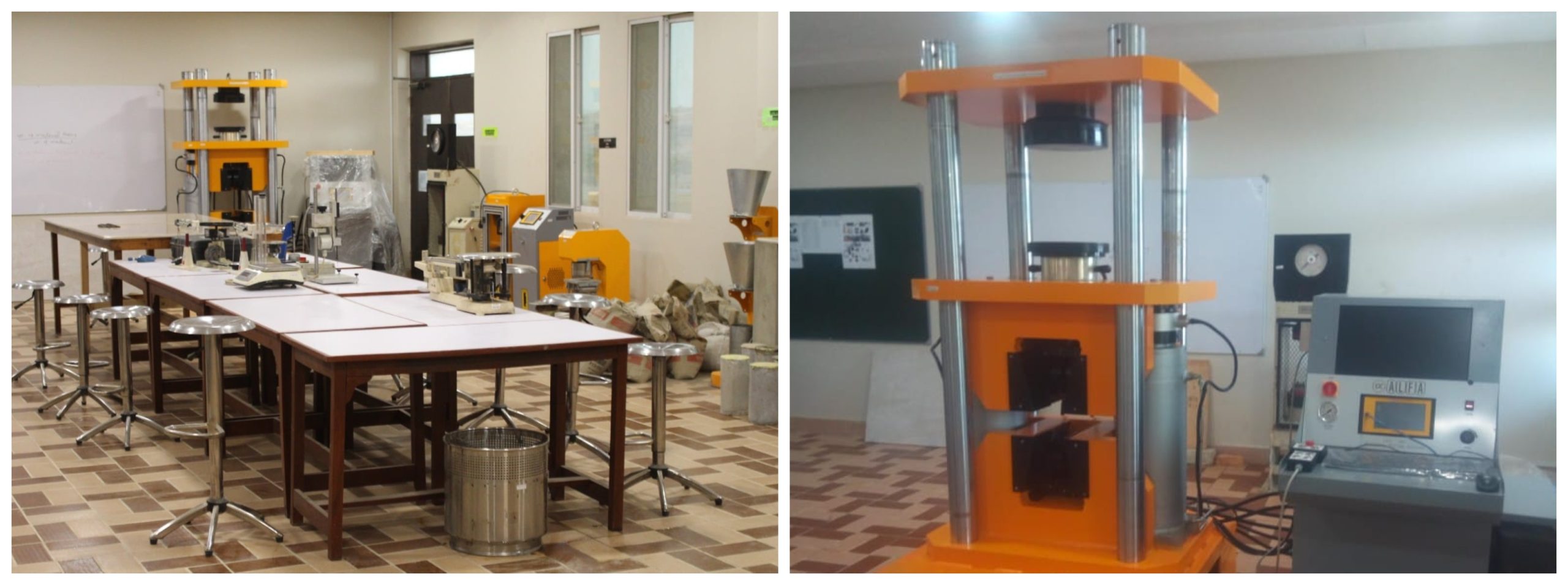
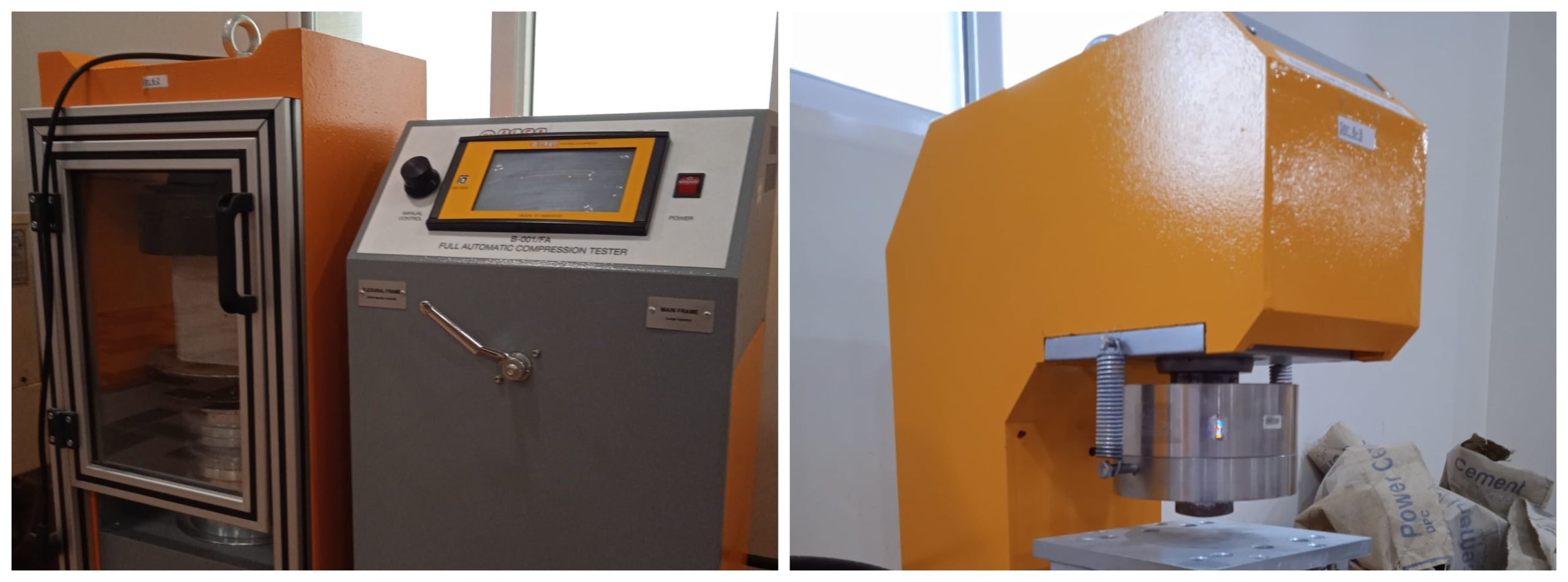
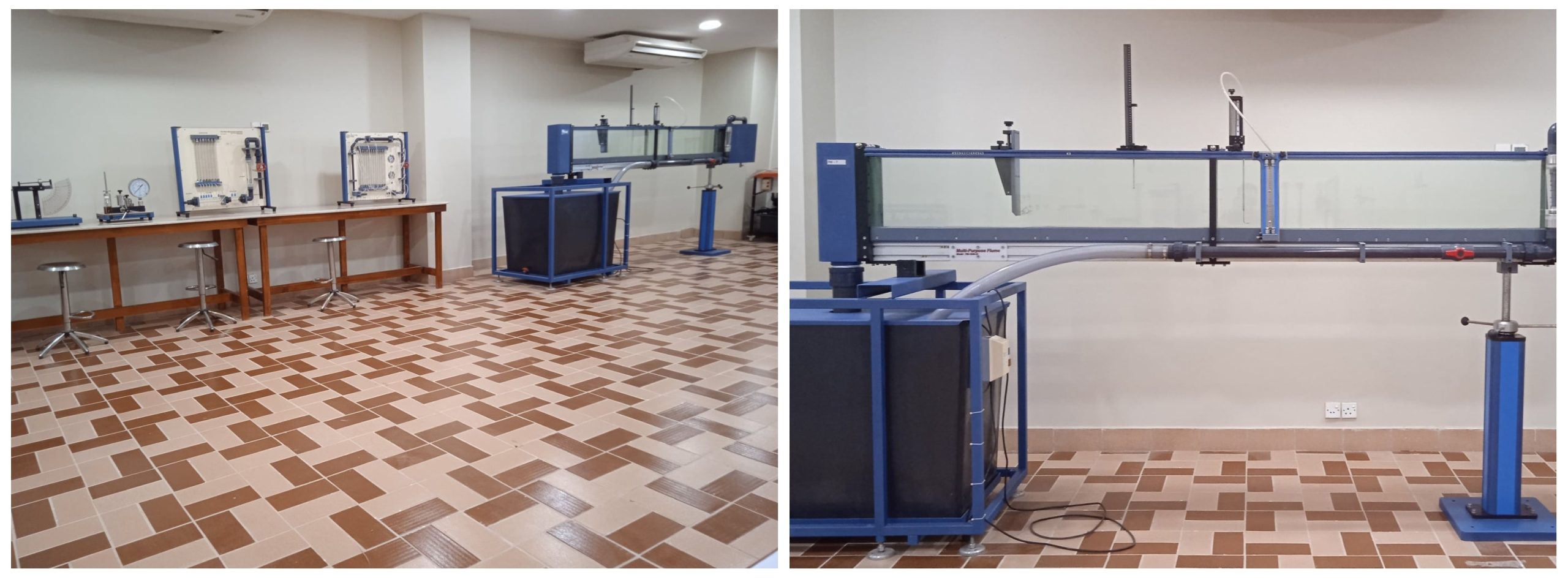
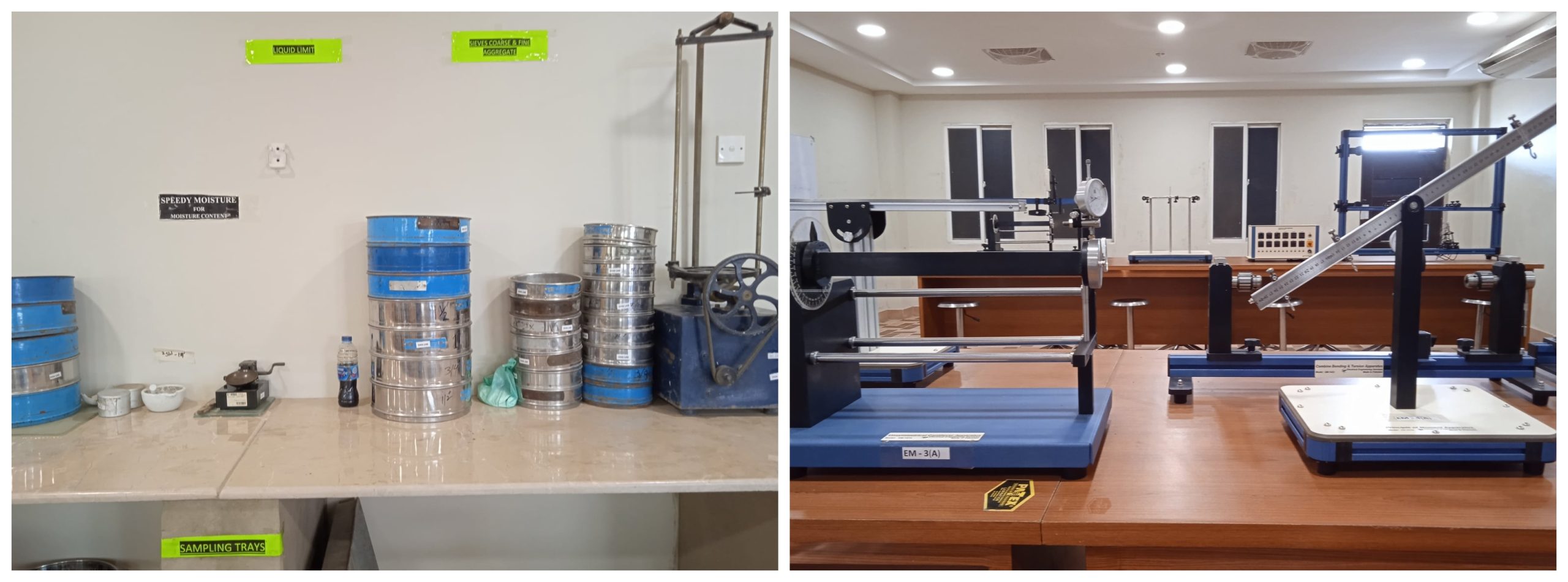
The Civil Engineering department shall consist of laboratories comprising of the state of the art of Engineering Surveying, Engineering Mechanics, Engineering Materials, Soil Mechanics Lab, Fluid Mechanics, and Transportation Engineering lab that shall equally support in conducting the experiments as well as producing quality research outputs. All these laboratories are included in the labwork of bachelors in Civil Engineering.
Accreditations
Pakistan Engineering Council (PEC) recently conducted Zero Visit and allowed to start for BE (Civil) program at DCK campus. The admission in bachelors in Civil Engineering have been already started. Pakistan Engineering Council (PEC) conducted Zero Visit in July 2020 and allowed to start for BE (Civil) program at DCK campus. Admissions in two batches has been done and third batch admissions will start soon.
Careers
BE in Civil Engineering from DSU offers students the opportunity to prepare for careers in traditional as well as emerging technologies related to Civil Engineering like Building Information Modelling, Data Sciences in Civil, Traffic Engineering, Ground-improvement techniques, and Innovative Materials. In addition to these, conventional engineering technologies involving structural engineering, hydraulics, construction management and water-resource management are possible career options after bachelors in Civil Engineering in the developing economy of Pakistan.
Industrial Liaison
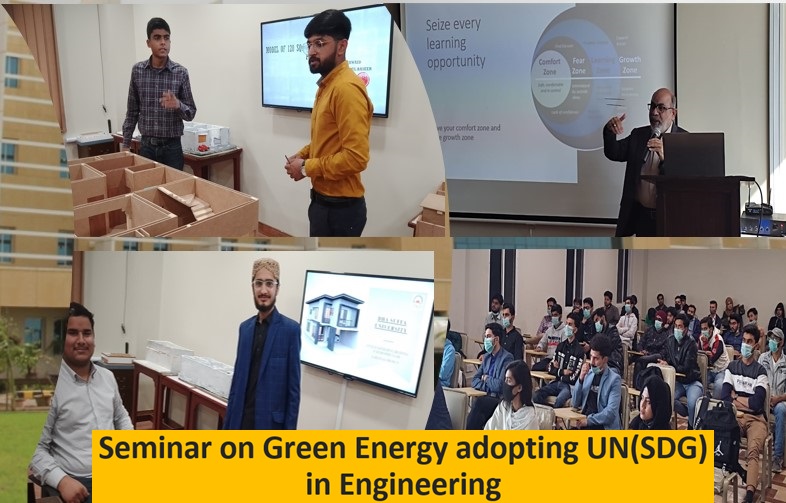
Statutory bodies of DHA Suffa University include professionals from industry and technical heads of various engineering organizations established across the region. The purpose of our mutual collaboration is to work towards faculty support, student exposure to the industry, technology incubation, internships & placements, mutual work-study exercises and staff training, in an effort to bridge the gap between academia and industry.
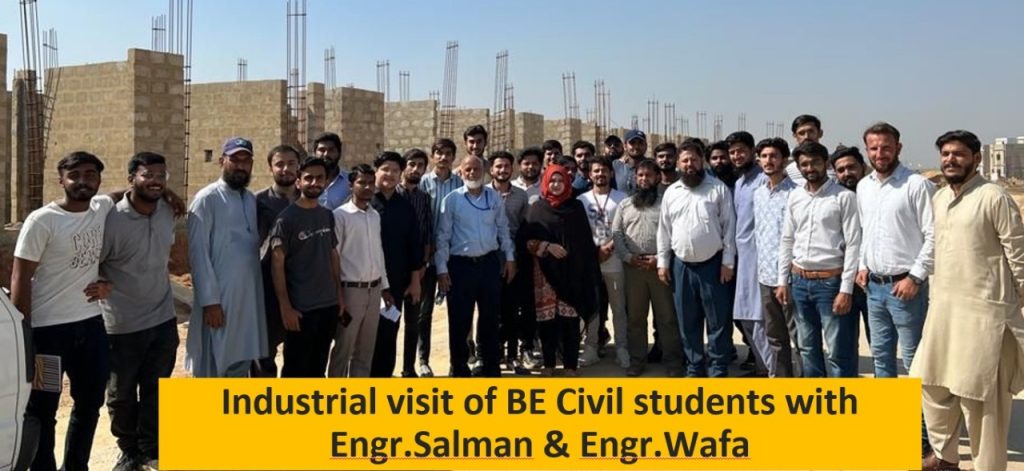
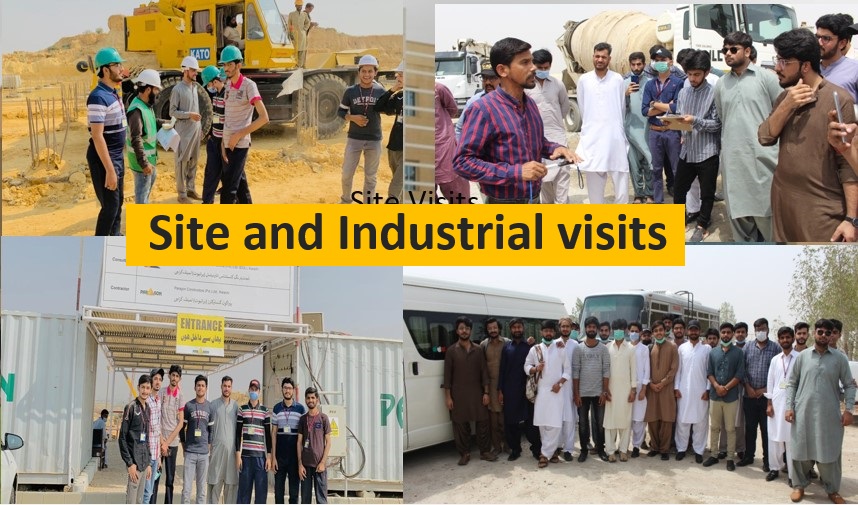
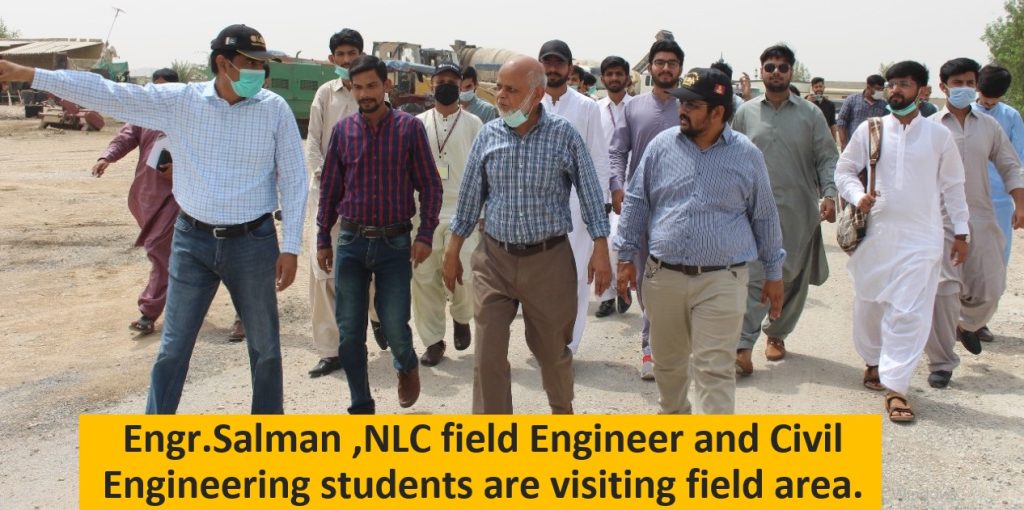
Advantages of studying Bachelors of Civil Engineering at DSU DCK campus
1. Practical Exposure:
Learning through compulsory internships, involvement in on-going mega projects at DCK including ARY Laguna, Malir Expressway etc., first-hand knowledge of the market trends, guest lectures from professionals etc.
2. Diverse Faculty:
Highly qualified individuals besides professionals working in the industry.
3. Accommodation:
Subsidized accommodation facility for students within DCK.
4. Facilities:
The campus has a dedicated library, a cafeteria and an elevator. Besides, hostel Accommodation, purpose-built sports facilities such as tennis courts, Gym, medical centre, mosque and regular transport to and from Karachi for the faculty and students.
5. Well-equipped Labs and Spacious Classrooms:
The four-story dedicated Civil Engineering building has been designed to cater 1000+ students with spacious labs, classrooms, drawing halls.
6. Location:
Calm, secure and peaceful environment of DHA City Karachi.
Eligibility Criteria for BE CIVIL ENGINEERING
- Intermediate or an equivalent examination (Pre-Engineering, Pre- Medical) with at least 60% marks
- Must have studied Mathematics, Physics and Chemistry at HSSC / A- level
- Applicants with O-Level / A-Level and Technical studies must submit equivalence from IBCC
- At least 50% marks in DSU Entrance Test
Required Documents
- Matriculation / O-Level / Equivalent Marks Sheet / Statements and Certificates
- Intermediate / Equivalent / A-Level Marks Sheet / Statements and Certificates
- Applicants with O-Level / A-Level and Technical studies must submit equivalence from IBCC
- College Provisional Certificate / Promotion Certificate by the respective Board
- A copy of CNIC and B-Form
- 3 passport-sized photographs with white background
- Admit Card / Statement of Entry is required, if awaiting result
Applicants are required to bring the following original documents for application processing:
Optional
- Valid test scores of NEDUET (current year), NTS NAT (IE/ICS) (current year) or SAT II (within two years) if appeared.
- Applicants Submitting NEDUET, NTS NAT (IE/ICS) or SAT II test scores shall be exempted from taking DSU’s entrance test.
- However, candidates who do not have good enough NEDUET, NTS NAT (IE/ICS) or SAT II scores will be advised to appear in the DSU Admissions Test for better chances of securing admission.
Program: BE CIVIL ENGINEERING
| Semester I | |||
|---|---|---|---|
| Sr. No | Course Code | Course Title | Credit Hours |
| 1 | BS-1105 | Applied Physics and Electro-Mechanical Fundamentals | 2 |
| 2 | BS-1105L | Applied Physics and Electro-Mechanical Fundamentals Lab | 1 |
| 3 | BS-1111 | Quantitative Reasoning – I | 3 |
| 4 | CE-1101 | Engineering Drawing | 1 |
| 5 | CE-1101L | Engineering Drawing Lab | 2 |
| 6 | CE-1201 | Engineering Materials | 2 |
| 7 | CE-1201L | Engineering Materials Lab | 1 |
| 8 | CS-1001 | Applications of ICT | 2 |
| 9 | CS-1001L | Applications of ICT Lab | 1 |
| 10 | HU-1002 | Functional English | 3 |
| Total Cr. Hr. | 18 | ||
| Semester II | |||
|---|---|---|---|
| Sr. No | Course Code | Course Title | Credit Hours |
| 1 | BS-1112 | Quantitative Reasoning-II | 3 |
| 2 | CE-1102 | Engineering Surveying | 2 |
| 3 | CE-1102L | Engineering Surveying Lab | 1 |
| 4 | CS-1110 | Computer Programming | 2 |
| 5 | CS-1110L | Computer Programming Lab | 1 |
| 6 | CE-1304 | Geology for Engineers | 2 |
| 7 | CE-1210 | Engineering Mechanics | 2 |
| 8 | CE-1210L | Engineering Mechanics Lab | 1 |
| 9 | HU-2104 | Ideology and Constitution of Pakistan | 2 |
| 10 | HU-2201 | Islamic Studies/Ethics | 2 |
| Total Cr. Hr. | 18 | ||
| Semester III | |||
|---|---|---|---|
| Sr. No | Course Code | Course Title | Credit Hours |
| 1 | BS-2113 | Calculus and Analytical Geometry | 3 |
| 2 | CE-2103 | Advanced Engineering Surveying | 2 |
| 3 | CE-2103L | Advanced Engineering Surveying Lab | 1 |
| 4 | CE-2211 | Strength of Materials-I | 3 |
| 5 | CE-2401 | Fluid Mechanics-I | 2 |
| 6 | CE-2401L | Fluid Mechanics-I Lab | 1 |
| 7 | HU-1003 | Communication Skills | 3 |
| Total Cr. Hr. | 15 | ||
| Semester IV | |||
|---|---|---|---|
| Sr. No | Course Code | Course Title | Credit Hours |
| 1 | BS-2114 | Differential Equations | 3 |
| 2 | CE-2212 | Strength of Materials-II | 3 |
| 3 | CE-2212L | Strength of Materials Lab | 1 |
| 4 | CE-2213 | Theory of Structures-I | 3 |
| 5 | CE-2402 | Fluid Mechanics-II | 2 |
| 6 | CE-2402L | Fluid Mechanics-II Lab | 1 |
| 7 | HU-2005 | Technical Writing | 3 |
| Total Cr. Hr. | 16 | ||
| Semester V | |||
|---|---|---|---|
| Sr. No | Course Code | Course Title | Credit Hours |
| 1 | BS-3303 | Numerical Analysis | 3 |
| 2 | CE-3306 | Geotechnical Engineering | 3 |
| 3 | CE-3306L | Geotechnical Engineering Lab | 1 |
| 4 | CE-3205 | Reinforced Concrete Design-I | 3 |
| 5 | CE-3205L | Reinforced Concrete Design-I Lab | 1 |
| 6 | CE-3507 | Advance Fluid Mechanics | 2 |
| 7 | CE-3507L | Advanced Fluid Mechanics Lab | 1 |
| 8 | HU-2203 | Expository Writing | 3 |
| Total Cr. Hr. | 17 | ||
| Semester VI | |||
|---|---|---|---|
| Sr. No | Course Code | Course Title | Credit Hours |
| 1 | CE-3508 | Engineering Hydrology | 2 |
| 2 | CE-3508L | Engineering Hydrology Lab | 1 |
| 3 | CE-3603 | Highway & Traffic Engineering | 2 |
| 4 | CE-3903 | Internship (6-8 Weeks) | NC |
| 5 | CE-3207 | Structural Analysis-II | 3 |
| 6 | CE-3503 | Environmental Engineering-I | 2 |
| 7 | CE-3503L | Environmental Engineering-I Lab | 1 |
| 8 | CE-3212 | Reinforced Concrete Design-II | 3 |
| 9 | CE-3212L | Reinforced Concrete Design-II Lab | 1 |
| 10 | HU-XXXX | Civics and Community Engagement | 2 |
| 11 | HU-XXXX | Community Service | NC |
| Total Cr. Hr. | 17 | ||
| Semester VII | |||
|---|---|---|---|
| Sr. No | Course Code | Course Title | Credit Hours |
| 1 | CE-4307 | Foundation Engineering | 2 |
| 2 | CE-4604 | Pavement Analysis & Design | 2 |
| 3 | CE-4604L | Pavement Analysis & Design Lab | 1 |
| 4 | CE-4109 | Modelling & Simulation | 1 |
| 5 | CE-4109L | Modelling & Simulation Lab | 1 |
| 6 | CE-4509 | Hydraulics Engineering | 2 |
| 7 | CE-4509L | Hydraulics Engineering Lab | 1 |
| 8 | CE-4901L | Civil Engineering Project-I | 3 |
| 9 | CE-4405 | Project Management | 2 |
| Total Cr. Hr. | 15 | ||
| Semester VIII | |||
|---|---|---|---|
| Sr. No | Course Code | Course Title | Credit Hours |
| 1 | CE-4406 | Architecture and Town Planning | 2 |
| 2 | CE-4110 | Geo Informatics | 1 |
| 3 | CE-4110L | Geo Informatics Lab | 1 |
| 4 | CE-4407 | Occupational Health & Safety | 1 |
| 5 | CE-4510 | Irrigation Engineering | 2 |
| 6 | CE-4510L | Irrigation Engineering Lab | 1 |
| 7 | CE-4213 | Steel Structures | 2 |
| 8 | CE-4902L | Civil Engineering Project-II | 3 |
| 9 | MS-4111 | Entrepreneurship | 2 |
| Total Cr. Hr. | 15 | ||
| Academic Streams | ||
|---|---|---|
| S No | Streams | Code |
| 1 | Drawing, Surveying and Computing | 1 |
| 2 | Structures and Material | 2 |
| 3 | Geotechnical Engineering | 3 |
| 4 | Construction Engineering | 4 |
| 5 | Water Resources & Environmental Engineering | 5 |
| 6 | Transportation and Urban Planning | 6 |
| 7 | Projects & Internship | 9 |
Program Educational Objectives
The graduates of Bachelor of Civil Engineering program, in five years, must be
- Effective role towards engineering profession at national and international level based on their technical knowledge and skills.
- Effective leadership, teamwork, communication skills and ethical approach to contribute in multi-disciplinary projects.
- Apply state-of-the-art methods to develop sustainable, economical, and environmentally sound solutions to engineering problems.
- Grow professionally in the career and be engaged in lifelong learning.
| Eleven Program Learning Outcomes (PLOs) – Effective from Fall 2024 Intake | ||
|---|---|---|
| Sr. No | Outcome Title | Description |
| PLO 1 | Engineering Knowledge | Apply knowledge of mathematics, natural science, engineering fundamentals and Engineering specialization to the solution of complex engineering problems. |
| PLO 2 | Problem Analysis | Identify, formulate, conduct research literature, and analyse complex Engineering problems reaching substantiated conclusions using first principles of mathematics, natural sciences and engineering sciences. |
| PLO 3 | Design/Development of Solutions | An ability to design solutions for complex engineering problems and design systems, components or processes that meet specified needs with appropriate consideration for public health and safety, cultural, societal, and environmental considerations. |
| PLO 4 | Investigation | Conduct investigation of complex Engineering problems using research-based knowledge and research methods, including design of experiments, analysis and interpretation of data, and synthesis of information to provide valid conclusions. |
| PLO 5 | Tool Usage | Create, select and apply appropriate techniques, resources, and modern engineering and IT tools, including prediction and modeling, to complex Engineering problems, with an understanding of the limitations. |
| PLO 6 | The Engineer and the World | Analyze and evaluate sustainable development impacts to society, the economy, sustainability, health and safety, legal frameworks, and the environment while solving complex engineering problems. |
| PLO 7 | Ethics | Apply ethical principles and commit to professional ethics and norms of engineering practice and adhere to relevant national and international laws. Demonstrate an understanding of the need for diversity and inclusion. |
| PLO 8 | Individual and Collaborative Team Work | Function effectively as an individual, and as a member or leader in diverse and inclusive teams and in multi-disciplinary, face-to-face, remote and distributed settings. |
| PLO 9 | Communication | Communicate effectively and inclusively on complex engineering activities with the engineering community and with society at large, such as being able to comprehend and write effective reports and design documentation, and make effective presentations, taking into account cultural, language, and learning differences. |
| PLO 10 | Project Management and Finance | Demonstrate knowledge and understanding of engineering management principles and economic decision-making and apply these to one's own work, as a member and leader in a team, to manage projects in multidisciplinary environments. |
| PLO 11 | Lifelong Learning | Recognize the need for, and have the preparation and ability for i) independent and life-long learning ii) adaptability to new and emerging technologies, and iii) critical thinking in the broadest context of technological change. |
| Twelve Program Learning Outcomes (PLOs) – Effective till Fall 2023 Intake | ||
|---|---|---|
| Sr. No | Outcome Title | Description |
| PLO 1 | Engineering Knowledge | An ability to apply knowledge of mathematics, science, engineering fundamentals, and an engineering specialization to the solution of complex engineering problems. |
| PLO 2 | Problem Analysis | An ability to identify, formulate, research literature, and analyze complex engineering problems reaching substantiated conclusions using first principles of mathematics, natural sciences, and engineering sciences. |
| PLO 3 | Design/Development of Solutions | An ability to design solutions for complex mechanical engineering problems and design systems, components, or processes that meet specified needs with appropriate consideration for public health and safety, cultural, societal, and environmental considerations. |
| PLO 4 | Investigation | An ability to investigate complex engineering problems in a methodical way including literature survey, design and conduct of experiments, analysis and interpretation of experimental data, and synthesis of information to derive valid conclusions. |
| PLO 5 | Modern Tool Usage | An ability to create, select, and apply appropriate techniques, resources, and modern engineering and IT tools, including prediction and modeling, to complex engineering activities, with an understanding of the limitations. |
| PLO 6 | The Engineer and Society | An ability to apply reasoning informed by contextual knowledge to assess societal, health, safety, legal, and cultural issues and the consequent responsibilities relevant to professional engineering practice and solutions to complex engineering problems. |
| PLO 7 | Environment and Sustainability | An ability to understand the impact of professional engineering solutions in societal and environmental contexts and demonstrate knowledge of, and need for sustainable development. |
| PLO 8 | Ethics | Apply ethical principles and commit to professional ethics and responsibilities and norms of engineering practice. |
| PLO 9 | Individual and Teamwork | An ability to work effectively, as an individual or in a team, on multifaceted and /or multidisciplinary settings. |
| PLO 10 | Communication | An ability to communicate effectively, orally as well as in writing, on complex engineering activities with the engineering community and with society at large, such as being able to comprehend and write effective reports and design documentation, make effective presentations, and give and receive clear instructions. |
| PLO 11 | Project Management | An ability to demonstrate management skills and apply engineering principles to one's own work, as a member and/or leader in a team, to manage projects in a multidisciplinary environment. |
| PLO 12 | Lifelong Learning | An ability to recognize the need for, and have the preparation and ability to engage in, independent and life-long learning in the broadest context of technological change. |
| PLOs - BE (Civil) Program - Batches 2024 & onwards | |||||
|---|---|---|---|---|---|
| S.No | PLO | PEO-1 | PEO-2 | PEO-3 | PEO-4 |
| 1 | Engineering Knowledge | ✓ | |||
| 2 | Problem Analysis | ✓ | |||
| 3 | Design/Development of Solutions | ✓ | |||
| 4 | Investigation | ✓ | |||
| 5 | Tool Usage | ✓ | |||
| 6 | The Engineer and the world | ✓ | |||
| 7 | Ethics | ✓ | |||
| 8 | Individual and collaborative Team Work | ✓ | |||
| 9 | Communication | ✓ | |||
| 10 | Project Management and Finance | ✓ | |||
| 11 | Life Long Learning | ✓ | |||
| PLOs- BE (Civil) Program- Batches 2023 & older | |||||
|---|---|---|---|---|---|
| S.No | PLO | PEO-1 | PEO-2 | PEO-3 | PEO-4 |
| 1 | Engineering Knowledge | ✓ | |||
| 2 | Problem Analysis | ✓ | |||
| 3 | Design/Development of Solutions | ✓ | |||
| 4 | Investigation | ✓ | |||
| 5 | Modern Tool Usage | ✓ | |||
| 6 | Engineers and Society | ✓ | |||
| 7 | Environment and Sustainability | ✓ | |||
| 8 | Ethics | ✓ | |||
| 9 | Individual and Team Work | ✓ | |||
| 10 | Communication | ✓ | |||
| 11 | Project Management | ✓ | |||
| 12 | Lifelong Learning | ✓ | |||
Program Educational Objectives
The graduates of Bachelor of Civil Engineering program, in five years, must be
- Effective role towards engineering profession at national and international level based on their technical knowledge and skills.
- Effective leadership, teamwork, communication skills and ethical approach to contribute in multi-disciplinary projects.
- Apply state-of-the-art methods to develop sustainable, economical, and environmentally sound solutions to engineering problems.
- Grow professionally in the career and be engaged in lifelong learning.
Program Learning Outcomes (PLOs)
– Universal Tensile & Compression Tester Machine
– Manual Vicat Apparatus
– Compacting Factor Apparatus
– Slump Flow Test Set Apparatus
– Electromagnetic Sieve Shaker and Stacks
– Concrete Penetrometer
– Drum Type Mixer
– Flakiness Sieve Set
– Sample Splitter
– Concrete Test Hammer
– Lab Oven
– Electronic Balance
– Cube Mould
– Cylinder Mould
– Beam Mould
– Poker Vibrator
– Sieves Set (Fine and Coarse)
Surveying Lab Equipment
– Total station
– Digital Theodolite
– GPS (handheld)
– Laser Distance Meter
– Long steel measuring tape Type I, II
– Plump Bob Type I, II
– Survey Arrows, Wooden Peg, Ranging Pole
– Carpenter Spirit level
– Analog Prismatic Compass, Digital Trough Compass
– Plane Table Survey
Fluid Mechanics Labs
– Hydraulic Bench
– Flow visualization in channel
– Fluid Properties and Hydrostatic bench
– Bernoulli’s theorem Apparatus
– Flow Over Weirs
– Free and forced vortex
– Flow visualization apparatus
– Energy losses in pipe bends and fittings
– Pelton wheel turbine
– Impact of jet Apparatus
– Pipe Friction Apparatus
– Orifice Discharge Apparatus
– Flow meter measurement Apparatus
– Drag coefficient Apparatus
– Horizontal Osborne Reynolds Apparatus
– Pipe Network Trainer
– Multi-purpose Flume 3m
Engineering Mechanics Labs
– Combined shear force & bending Moment Apparatus
– Reactions of Beam Apparatus
– Forces in a Truss Apparatus
– Unsymmetrical Bending & Shear Apparatus
– Buckling of Struts Apparatus
– Friction on the Inclined plane Apparatus
– Deflection on a Beam Apparatus
– Compound Wires Apparatus
– Polygon and Forces Apparatus
– Principle of Moment Apparatus
– Combined bending and Torsion Apparatus
| PROGRAM | ONE TIME CHARGES (ONLY IN 1ST SEMESTER FEES) | PER SEMESTER | |||||
|---|---|---|---|---|---|---|---|
| ADMISSION FEE | CAUTION MONEY (REFUNDABLE) | IT CHARGES | MISC. CHARGES | Examination Charges (Per Course) | LAB CHARGES (PER CREDIT HOUR) |
TUITION FEE (PER CREDIT HOUR) |
|
| BE(Civil) | 15,000 | 10,000 | 6,000 | 7,000 | 1,000 | 13,750 | 6,000 |
| PROGRAMS | 1ST SEMESTER FEE AMOUNT | SEMESTER FEE (WITHOUT ADM & C/ MONEY) | CREDIT HOURS 1ST SEMESTER |
|---|---|---|---|
| BE(Civil) | 165,000 | 140,000 | 11 + 4 |
| Semester | I | II | III | IV | V | VI | VII | VIII |
|---|---|---|---|---|---|---|---|---|
| Theory Cr. Hr. | 11 | 12 | 11 | 17 | 14 | 13 | 12 | – |
| Lab Cr. Hr. | 4 | 5 | 5 | 1 | 4 | 4 | 5 | – |