Bachelor of Architecture
INTRODUCTION
The Department of Architecture is a forward-looking academic environment where design, technology, sustainability, and professional practice come together. The Department prepares future architects to respond creatively and responsibly to the changing demands of the built environment.
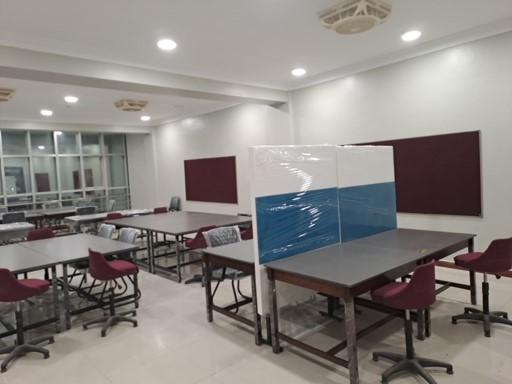
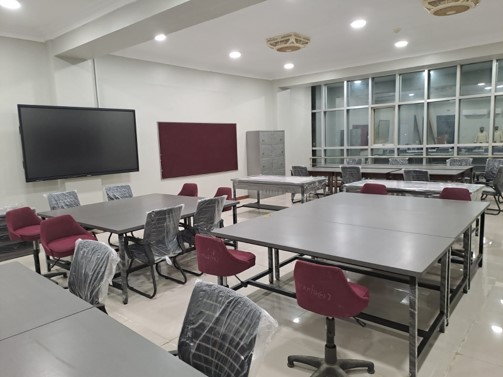
Our approach to architectural education is studio-based, experiential, and connected to real-world contexts. Students learn through design exploration, field engagement, digital and computational tools, research, and interaction with professionals and communities.
The Department places strong emphasis on livability, sustainable and biophilic design, digital innovation, stakeholder collaboration, and climate-responsive architecture. Local urban challenges, particularly those emerging from Karachi and Pakistan, provide an important context for learning while maintaining an international outlook.
Through this approach, the Department seeks to develop creative, digitally fluent, socially responsive, and professionally responsible architects who can contribute to the design of resilient, sustainable, and inclusive environments in Pakistan and around the world.
Departmental Mission
To educate architects through learning on live ground integrating intelligent tools biophilic and sustainable design stake holder collaboration and professional practice and to prepare graduates who can responsibly design live able envoienments and contribute to emerging sustainable cities.
Eligibility Criteria (PCATP Mandate)
- Academic Qualification: Higher Secondary School Certificate (HSC / Intermediate) Pre-Engineering, Pre-Medical, or an equivalent qualification with mathematics and physics (such as A-Levels). 50% marks.
- Mathematics Policy: from Pre-Medical background will need to take additional mathematics courses in their first year.
- Admission Test: Mandatory 1-hour time-based test. As per PCATP 2021 mandate, the test must include sections on Sketching, Maths, English, and General Knowledge.
- Personal Interview: Mandatory Personal Aptitude Assessment to verify the student's interest and suitability for "skill-based" architectural education.
Required Documents
- Matriculation / O-Level / Equivalent Marks Sheet and Certificates
- Intermediate / Equivalent / A-Level Marks Sheet and Certificates
- IBCC Equivalence Certificate (for O-Level / A-Level / Technical studies)
- College Provisional Certificate / Promotion Certificate
- Copy of CNIC and B-Form
- 3 passport-sized photographs (white background)
- Admit Card / Statement of Entry (if awaiting results)
Applicants are required to bring the following original documents for application processing:
Important Remarks
- While the PCATP minimum eligibility is 50%, the institution reserves the right to set higher bars for quality control.
- The Admission Test and Interview are non-negotiable requirements for all applicants seeking enrollment in the Architecture program.
Program: Bachelor of Architecture
| Semester I | |||
|---|---|---|---|
| Sr. No | Course Code | Course Title | Credit Hours |
| 1 | AR-1111 | Foundation Studio-I | 01+05 |
| 2 | AR-1141 | Visual Communication-I | 01+01 |
| 3 | AR-1171 | History of Art & Architecture-I | 02+0 |
| 4 | CE-1101 | Ideology and Constitution of Pakistan | 02+0 |
| 5 | CE-1101L | Functional English | 02+0 |
| 6 | HU- | Fehm ul Quran I/ Religion, Culture, and Society | 0+03 |
| 7 | HU-XXXX | Islamic studies/Religious Studies/Ethics | 02+0 |
| Total Cr. Hr. | 10+9=19 | ||
| Semester II | |||
|---|---|---|---|
| Sr. No | Course Code | Course Title | Credit Hours |
| 1 | AR-1211 | Foundation Studio-II | 1+5 |
| 2 | AR-1241 | Visual Communication-II | 1+1 |
| 3 | AR-1271 | History of Art & Architecture-II | 2+0 |
| 4 | HU-XXXX | Expository Writing-I | 2+0 |
| 5 | AR-1121 | Materials and Construction – I | 1+1 |
| 6 | HU-XXXX | Pakistan Studies | 2+0 |
| 7 | HU-1304 | Fehm ul Quran II/ Religion, Culture, and Society | 0+3 |
| Total Cr. Hr. | 9+10=19 | ||
| Semester III | |||
|---|---|---|---|
| Sr. No | Course Code | Course Title | Credit Hours |
| 1 | AR-2111 | Architectural Studio-I | 1+5 |
| 2 | AR-2121 | Structural Analysis-I | 2+0 |
| 3 | AR-2122 | Materials & Construction-II | 1+1 |
| 4 | AR-2171 | History of Art & Architecture-III | 2+0 |
| 5 | AR-2141 | Visual Communication-III | 1+1 |
| 6 | CS-2151 | Application of ICT | 2+1 |
| 7 | AR-2161 | Energy and Environment-I | 2+0 |
| Total Cr. Hr. | 11+8=19 | ||
| Semester IV | |||
|---|---|---|---|
| Sr. No | Course Code | Course Title | Credit Hours |
| 1 | AR-2211 | Architectural Studio-II | 1+5 |
| 2 | AR-2221 | Materials and Construction – III | 1+1 |
| 3 | AR-2222 | Structural Analysis-II | 2+0 |
| 4 | AR-2223 | Building Services and System-I | 2+0 |
| 5 | AR-2271 | History of Art & Architecture-IV | 2+0 |
| 6 | BS-1111 | Quantitative Reasoning-I | 3+0 |
| 7 | AR-2224 | Energy and Environment-II | 2+0 |
| Total Cr. Hr. | 13+6=19 | ||
| Semester V | |||
|---|---|---|---|
| Sr. No | Course Code | Course Title | Credit Hours |
| 1 | AR-3111 | Architectural Studio-III | 1+5 |
| 2 | AR-3121 | Materials & Construction-IV | 1+1 |
| 3 | AR-3122 | Building Services and Systems-II | 1+1 |
| 4 | AR-3171 | Theory of Architecture-I | 2+0 |
| 5 | AR-3141 | Digital Tools for Architects-I | 0+2 |
| 6 | AR-3181 | Photography | 0+2 |
| 7 | BS-1112 | Quantitative Reasoning-II | 2+0 |
| Total Cr. Hr. | 7+11=18 | ||
| Semester VI | |||
|---|---|---|---|
| Sr. No | Course Code | Course Title | Credit Hours |
| 1 | AR-3211 | Architectural Studio-IV | 1+7 |
| 2 | AR-3221 | Building Services & Systems-III | 1+1 |
| 3 | AR-3271 | Theory of Architecture-II | 2+0 |
| 4 | AR-3272 | Disaster Resilient Architecture | 1+1 |
| 5 | AR-3241 | Digital Tools for Architects-II | 0+2 |
| 6 | HU-3251 | Civics and Community Engagement | 1+1 |
| Total Cr. Hr. | 6+12=18 | ||
| Semester VII | |||
|---|---|---|---|
| Sr. No | Course Code | Course Title | Credit Hours |
| 1 | AR-4111 | Architectural Studio-V | 1+7 |
| 2 | AR-4171 | Livability | 2+0 |
| 3 | AR-4172 | Landscape-Basophilic Design | 1+1 |
| 4 | CS-4181 | Artificial Intelligence | 0+2 |
| 5 | AR-4182 | Building Economics | 2+0 |
| 6 | AR-4191 | Product Design (optional) | 1+1 |
| Total Cr. Hr. | 7+11=18 | ||
| Semester VIII | |||
|---|---|---|---|
| Sr. No | Course Code | Course Title | Credit Hours |
| 1 | AR-4211 | Architectural Studio-VI | 1+7 |
| 2 | AR-4241 | Architectural Research Methods | 2+0 |
| 3 | AR-4251 | Entrepreneurship | 2+0 |
| 4 | AR-4271 | Interior Design | 1+1 |
| 5 | BS-4282 | Project Management | 2+0 |
| 6 | BS-4291 | Digital Marketing (optional) | 1+1 |
| Total Cr. Hr. | 9+9=18 | ||
| Semester IX | |||
|---|---|---|---|
| Sr. No | Course Code | Course Title | Credit Hours |
| 1 | AR-5111 | Thesis Design-I | 0+8 |
| 2 | AR-5141 | Professional Practice | 3+0 |
| 3 | AR-5112 | Urban Design and Planning | 1+7 |
| 4 | AR-5181 | Construction Management | 2+0 |
| Total Cr. Hr. | 6+15=21 | ||
| Semester X | |||
|---|---|---|---|
| Sr. No | Course Code | Course Title | Credit Hours |
| 1 | AR-5211 | Thesis Design-II | 0+8 |
| 2 | AR-5241 | Internship | 3+0 |
| 3 | AR-5242 | Building Information Model | 0+2 |
| 4 | AR-5221 | Advanced Technology in Building Performance | 1+2 |
| Total Cr. Hr. | 4+12=16 | ||
| PROGRAM EDUCATION OBJECTIVES (PEOs) | ||
|---|---|---|
| Sr. No | Description | |
| PEO 1 | Graduates demonstrate their ability to apply architectural knowledge (history, theories of architecture / related art, culture, environment, social science, urbanism, and technology) in preparing design proposals and solving complex architectural design problems. | |
| PEO 2 | Graduates exhibit an adequate knowledge of building construction, building systems structure, (mechanical, and electrical), and services in architectural planning. | |
| PEO 3 | Graduates demonstrate an adequate level of effective communication through interpersonal skills, leadership, teamwork, self-management, and digital and design tools. | |
| PEO 4 | Graduates demonstrate the ability to investigate, think critically, and analyze problems of diverse and complex nature. | |
| PEO 5 | Graduates participate actively in activities and processes related to professional practice, development, and life-long learning. | |
| PROGRAM LEARNING OUTCOMES (PLOs) | ||
|---|---|---|
| Sr. No | Outcome Title | Description |
| PLO 1 | Architectural Knowledge | Ability to apply Architecture knowledge (history, theories of architecture / related art, culture, environment, social science, urbanism, and related technology) in the context of architectural design problems. |
| PLO 2 | Professional Skills | Ability to comprehend the requirements of building users in depth and translate the same in architectural design efficiently with appropriate solutions for architectural, structural, and building construction associated problems. |
| PLO 3 | Critical Thinking | Ability to identify, investigate, analyze, and comparatively evaluate critical / complex architectural problems and suggest multiple viable design solutions. |
| PLO 4 | Communication | Ability to convey ideas and express rationale clearly in design through effective communication including but not limited to proposals, presentations, reports, multimedia, and digital tools. |
| PLO 5 | Investigation | Ability to investigate complex architectural and related problems through various methods including literature review, case studies, surveys, simulations, experimental investigation, interpretation of data, and synthesis of information leading to conclusions. |
| PLO 6 | Leadership and Professional Ethics | Ability to inspire and motivate the team members with leadership skills including interaction, collaboration, negotiation, interpersonal skills, and professional ethics for an effective working relationship /environment. |
| PLO 7 | Lifelong Learning | Ability to acquire knowledge, professional skills, and information in the context of innovation and professional development through continuous efforts from diverse sources. |
| PLO 8 | Architect and Society | Ability to understand the role of an architect in societal and environmental contexts addressing contemporary issues through design solutions. |